

Tight Credit Spreads Signal Upside for Stocks
by Alec Young All, Macro Insights, StocksInvestors sure have their hands full.
The Fed is raising rates to fight high oil prices and sticky inflation. Futures markets are pricing in two more hikes by March.
Meanwhile, long-term interest rates are near 5% amid record deficits and AI-driven corporate bond issuance.
To top it all off, regulatory and security worries are fanning AI slowdown fears heading into the midterms.
It’s a challenging backdrop. But we’re staying bullish - an overlooked macro signal is flashing green amid the gloom.
Today, we’re showing you 2 reliable, time-tested studies pointing to upside ahead.
You just need to narrow your buy-list…and follow the flows.
Let’s start with a valuable signal to heed from the credit markets.
Tight Credit Spreads Signal Upside for Stocks
Investors are always worrying. It’s in their blood.
Jitters drive pullbacks and quick corrections. Deeper drawdowns and bear markets occur when some version of the market’s fears actually happen.
The good news is most of the time stocks rebound fast as investors’ worries prove overblown.
Credit spreads can act as an early warning signal that helps separate real signals from noise.
Credit spreads measure the premium companies pay above comparable Treasury yields to borrow money.
Given all the macro doom and gloom, you’d expect spreads to be widening out notably.
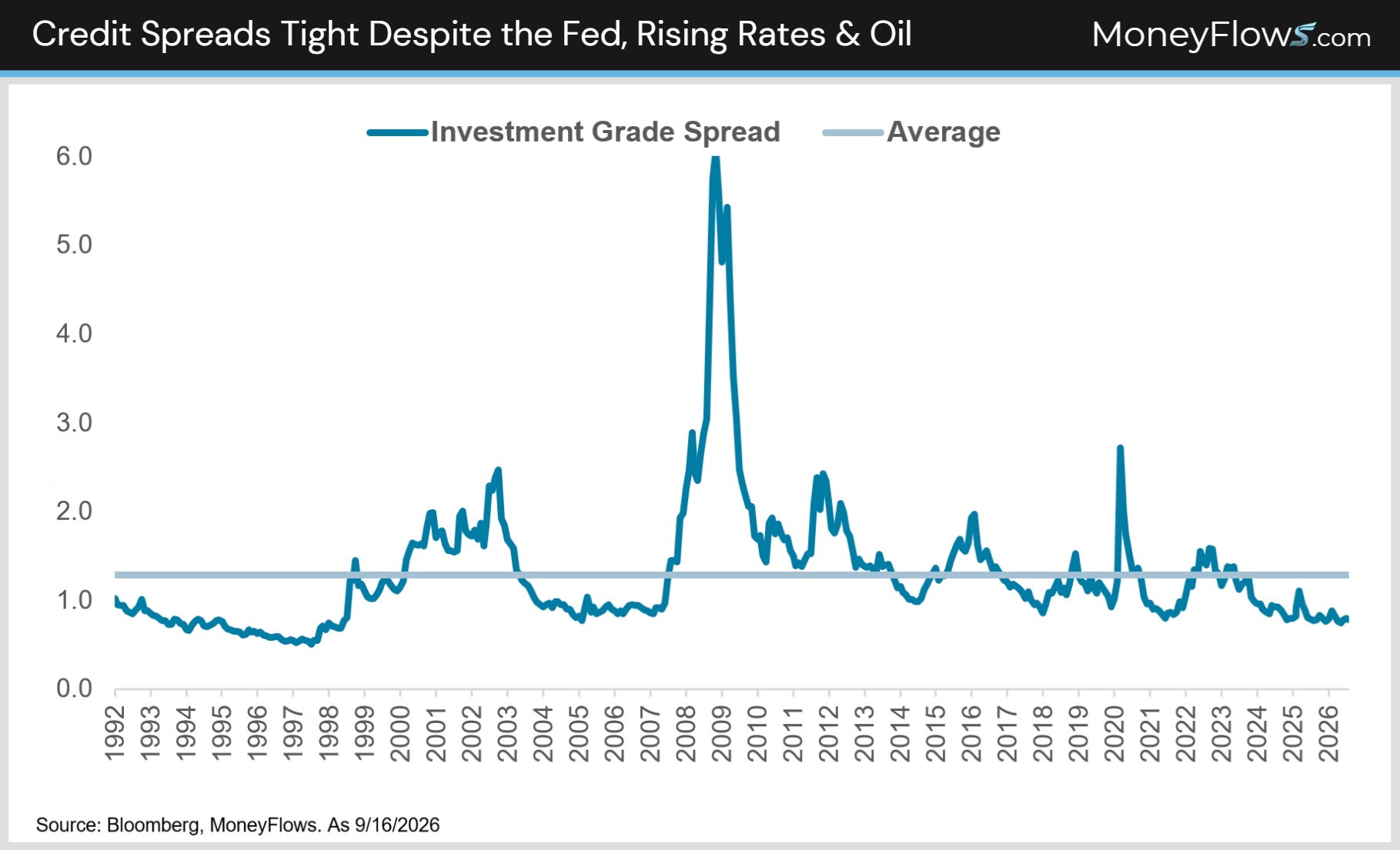
Despite all the macro noise, investment grade credit spreads are currently near record-tight levels at only 81 basis points above Treasuries. That’s well below the long-term average of 129 basis points:
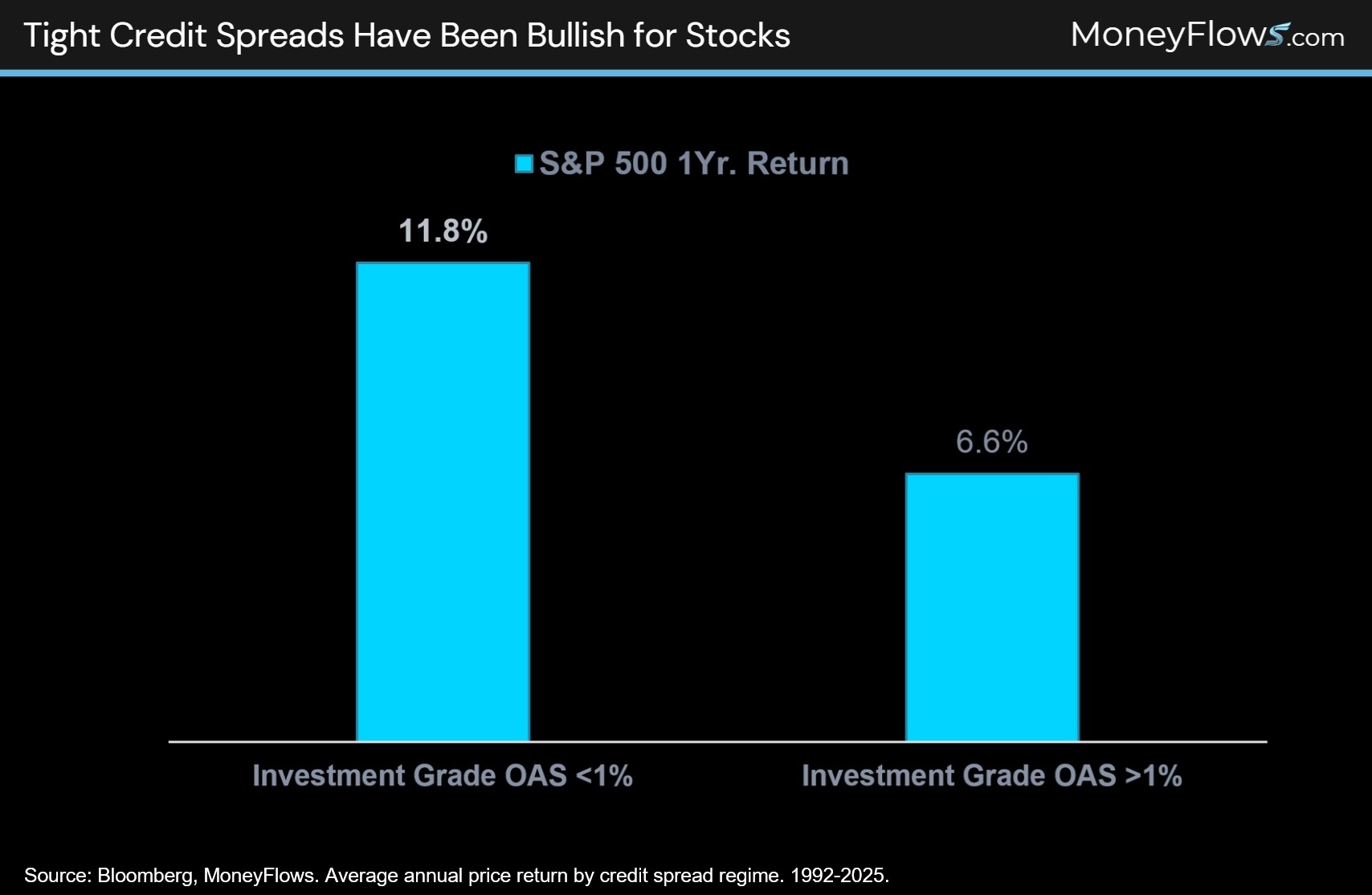
Here’s the best part. Stocks outperform when credit spreads are under 1%. This makes sense because super tight spreads reflect bond investors’ high confidence in the health of corporate America.
Since 1989, the S&P 500 has gained 12% in the 12-months following sub 1% investment grade credit spread readings vs. only 6.6% average advances when credit spreads have been above 1% (chart).
Even better, stocks have been less volatile in sub 1% credit spread regimes. The biggest S&P 500 drawdown was only 20% vs. a maximum drawdown of 69% when spreads were north of 1%.
Let’s dig deeper with a look at the high yield credit market to see what it signals for stocks.
VIX Rises More than High Yield Credit Spreads
The relationship between equity stress (VIX) and credit stress (high yield spreads) holds valuable clues about what’s ahead for stocks.
The bond market is often considered the “smarter” market, and when it fails to weaken alongside a rising VIX, it often signals that equity selling is overdone, creating a, buying opportunity.
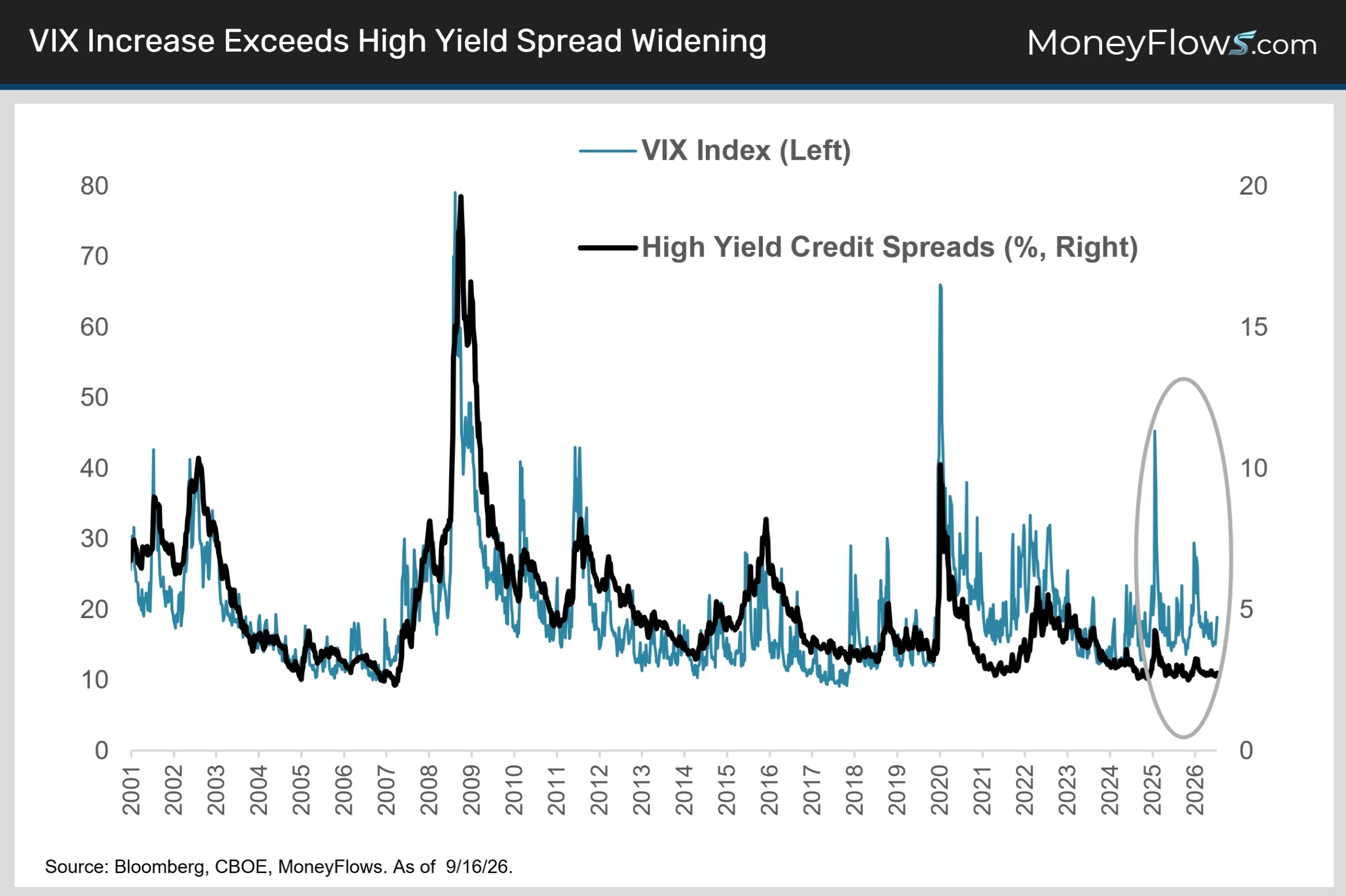
In the latest bout of risk aversion, the VIX’s rise has outpaced credit spread widening.
We saw the same equity/credit dynamic in April 2025 on Liberation Day and again this past March, both of which turned out to be an epic time to buy.
All three episodes are highlighted on the chart below:
Here’s the best part. Since 1990, the S&P 500 has averaged 15% gains a year after relative equity panics like we’re seeing now:
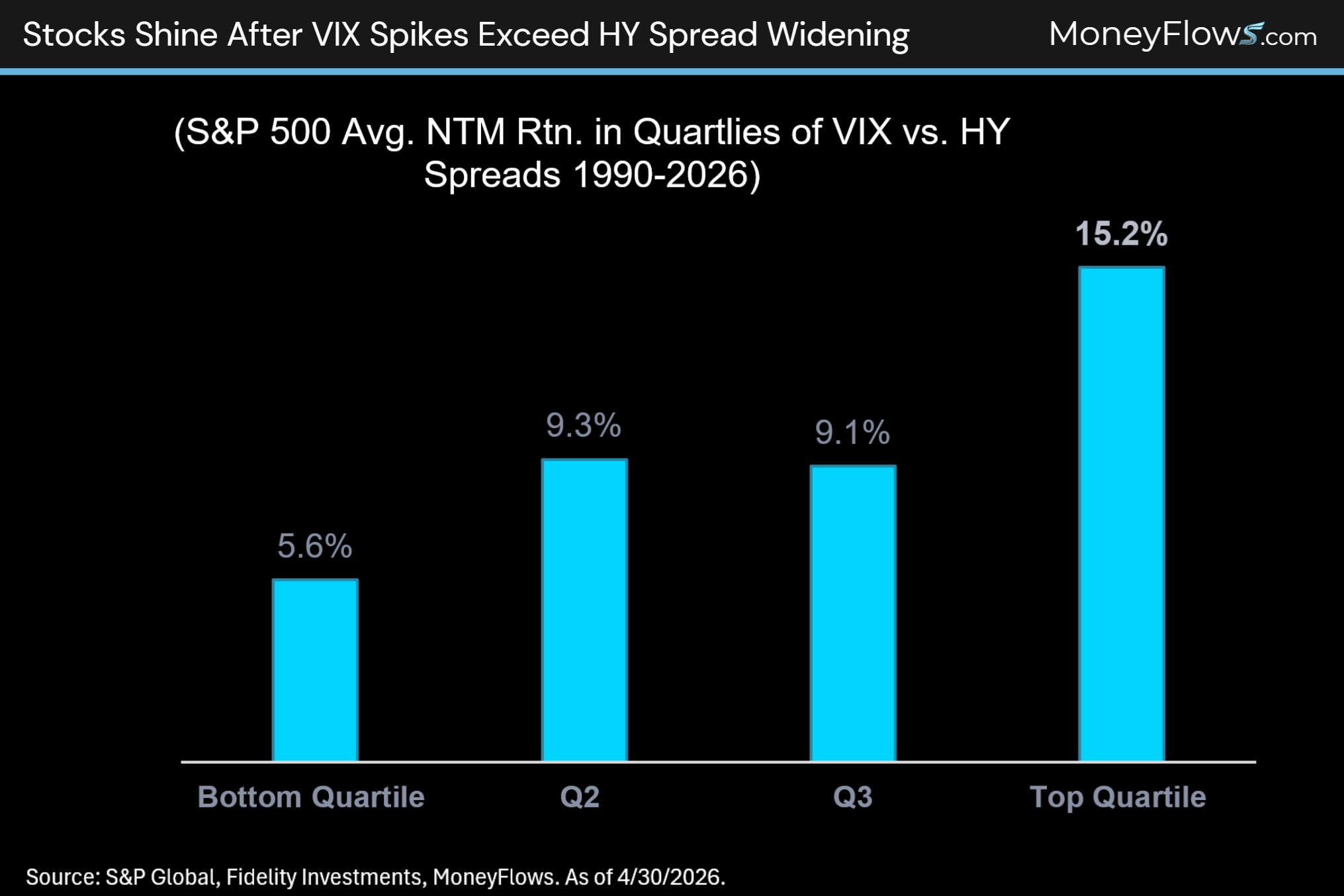
Here’s the bottom line: credit markets are telling us the macro is better than the crowd thinks.
What This Means for Your Portfolio
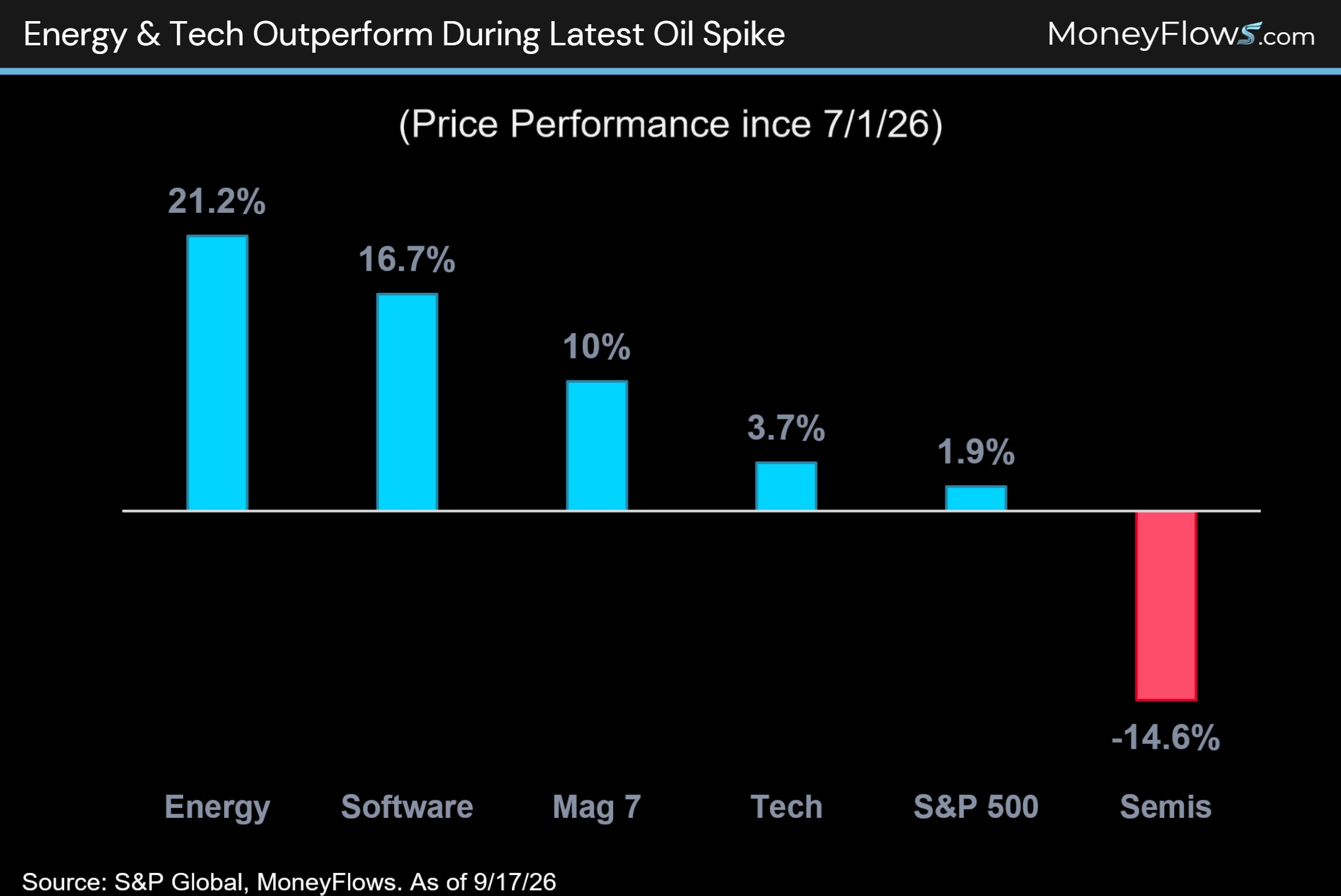
Recently, the primary driver of their outperformance has been less vulnerability to soaring oil prices.
Oil has rocketed from the high $60s to over $100 since July 1.
We know stocks follow earnings and energy obviously benefits most.
CY 2026 S&P 500 energy earnings growth has been revised up to 86% from 64% on June 30, per FactSet.
But tech has also been outperforming thanks to strength in software and the Mag 7, which have offset profit taking in semis (chart).
Tech’s resilience is an earnings story too. Tech and communications services 2026 earnings growth forecasts have been marked up to 52% and 56%, respectively, from only 48% and 29%, respectively on June 30.
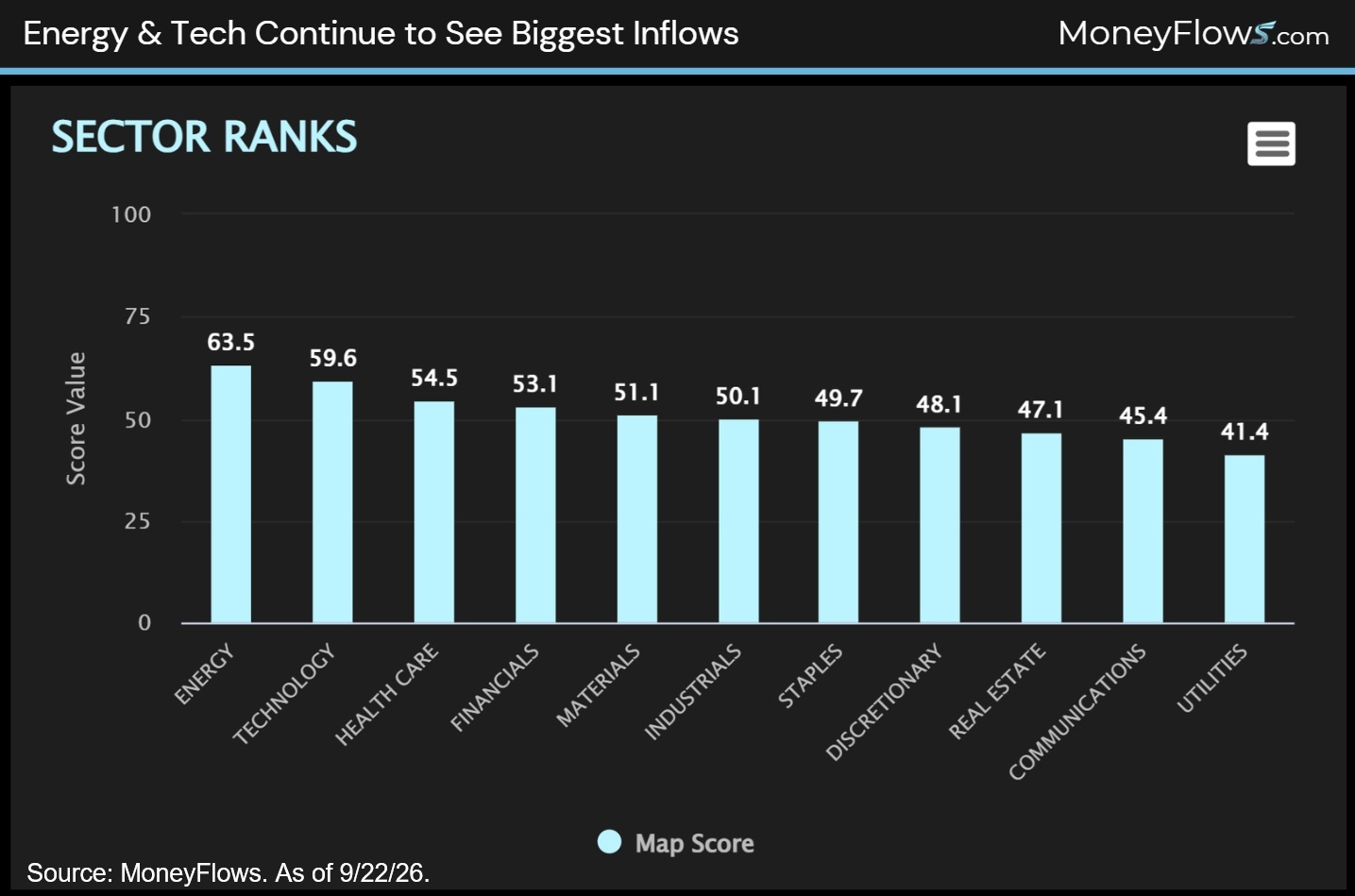
We’re seeing a similar trend in our sector inflows with energy and tech firmly ahead in our rankings, while health care also sees healthy big money interest:
To win big, you need to drill down to individual names.
Not to worry, MoneyFlows was built to find winners.
Today’s stock list is long growthy energy, tech and health care outliers.
Under-the-surface of the market is a world of hidden opportunity.
To get access and make even more from this call to action, sign up for a PRO (Annual) membership.
You’ll get our proprietary indicators and learn how our unique money flow approach finds outlier stocks early. Give it a shot!
If you’re a money manager or RIA and want portfolio solutions and deep ETF insights, reach out about our Advisor solution here.
Be early next time.
Go with the flows!
Energy, tech and health care are seeing the biggest inflows in nervous market.
Below, PRO subscribers can see they feature prominently in our latest Outlier 20 most powerful winning stocks with big money activity.