

Buy Stocks into Rate Hikes
by Alec Young All, Macro Insights, StocksIf you want to worry investors, start increasing interest rates.
Scars from 2022 emerge.
Memories of a tech crash are a hard pill to swallow.
Just don’t fall for the mistake of thinking 2026 is similar to back then.
This go round, you’ll want to buy stocks into rate hikes.
Let’s zero in on why.
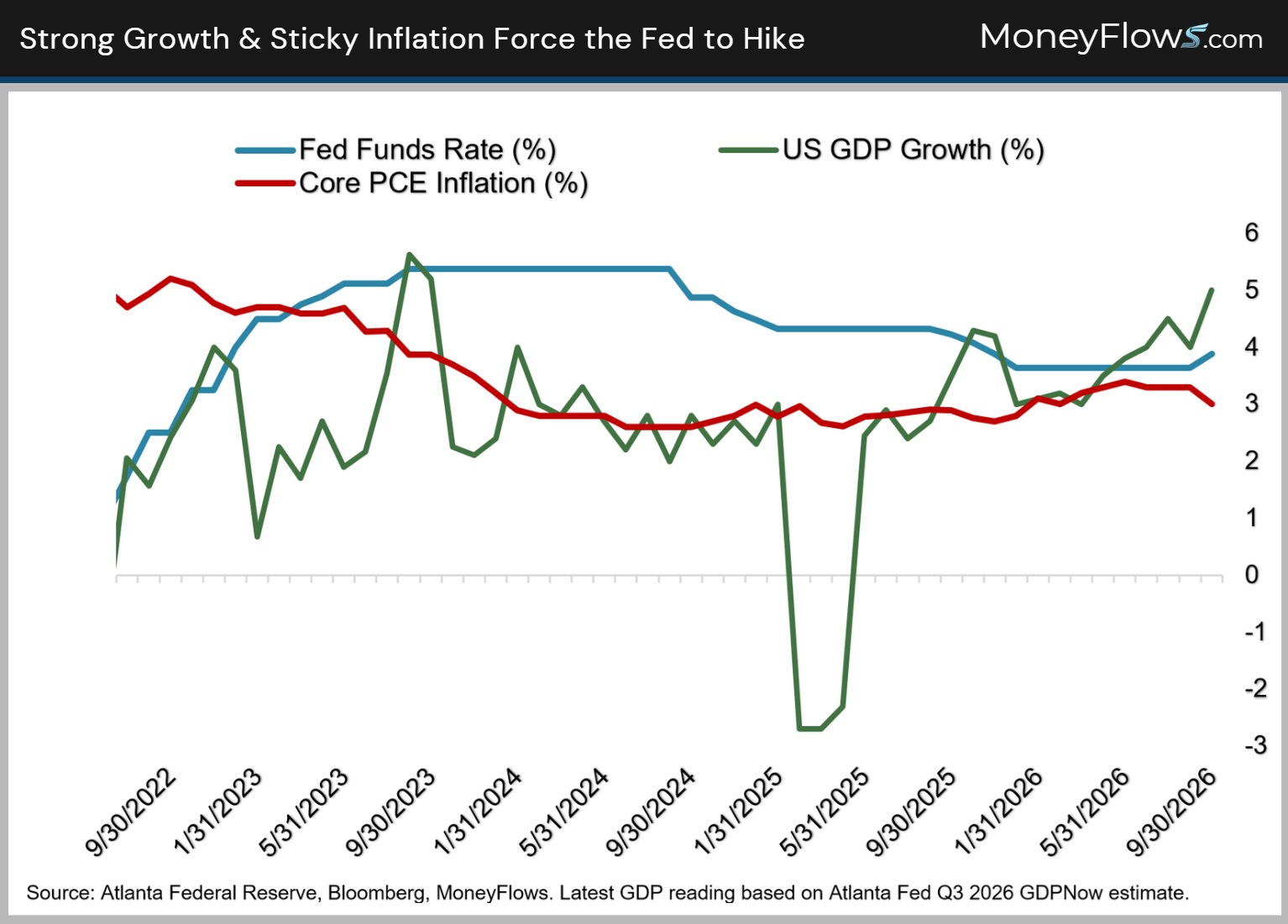
The Fed raised rates on September 16 in the face of strong growth and sticky core inflation (chart).
We’ve had 15 Fed tightening cycles since 1950.
1997 was the single time the Fed only hiked once.
Futures markets are pricing in four more hikes including the December and March FOMC meetings.
The conventional wisdom in the stock market says, Don’t fight the Fed…the party must be over.
Not so fast, regular readers know we love using underappreciated data to debunk the crowd.
Today, we’ll show you 3 bankable, macro reasons to buy stocks into rate hiking regimes.
Simply own the best sectors and outlier stocks…that’s the recipe.
The Fed is Tightening for the Right Reasons
Here’s reason #1 Fed rate hikes won’t derail the stock market.
Ultimately, investors care less about rate hikes and more about why the Fed is raising rates.
Historically, the biggest stock market corrections happen when the Fed finds itself significantly behind the curve on inflation and is forced into an aggressive rate hiking cycle to get high prices under control.
That’s what cracked stocks back in 2022. Inflation shot up to 9%, and the Fed had to hike by over 400 bps.
Today, tighter monetary policy primarily reflects stronger economic growth, resilient AI infrastructure and consumer demand, and record corporate earnings.
The latest Atlanta Fed Q3 GDP nowcast is 3.7% and 2026 S&P 500 EPS growth is running north of 33%.
That’s why stocks are holding up relatively well in the face of surging rates across the yield curve.
Is this a bull or a bear signal?
Keep reading and I’ll let you decide.
Buy Stocks into Rate Hikes
Here’s reason #2 stocks can handle rate hikes.
While core PCE inflation remains sticky at 3%, the latest reading came in 0.3% lighter than expected.
And with four additional hikes priced into the bond market, Fed hawkishness is likely peaking now (chart).
As the surge in oil and semiconductor prices, asset management fees and tariff costs – the 4 biggest drivers of today’s inflation - inevitably ease as year-over-year comparisons get more difficult, pricing pressures will cool off.
But if you wait for that to become obvious, you’ll miss the bullish inflection point in stocks.
The 2 Year Treasury yield is leveling off…suggesting rate fears may have peaked:
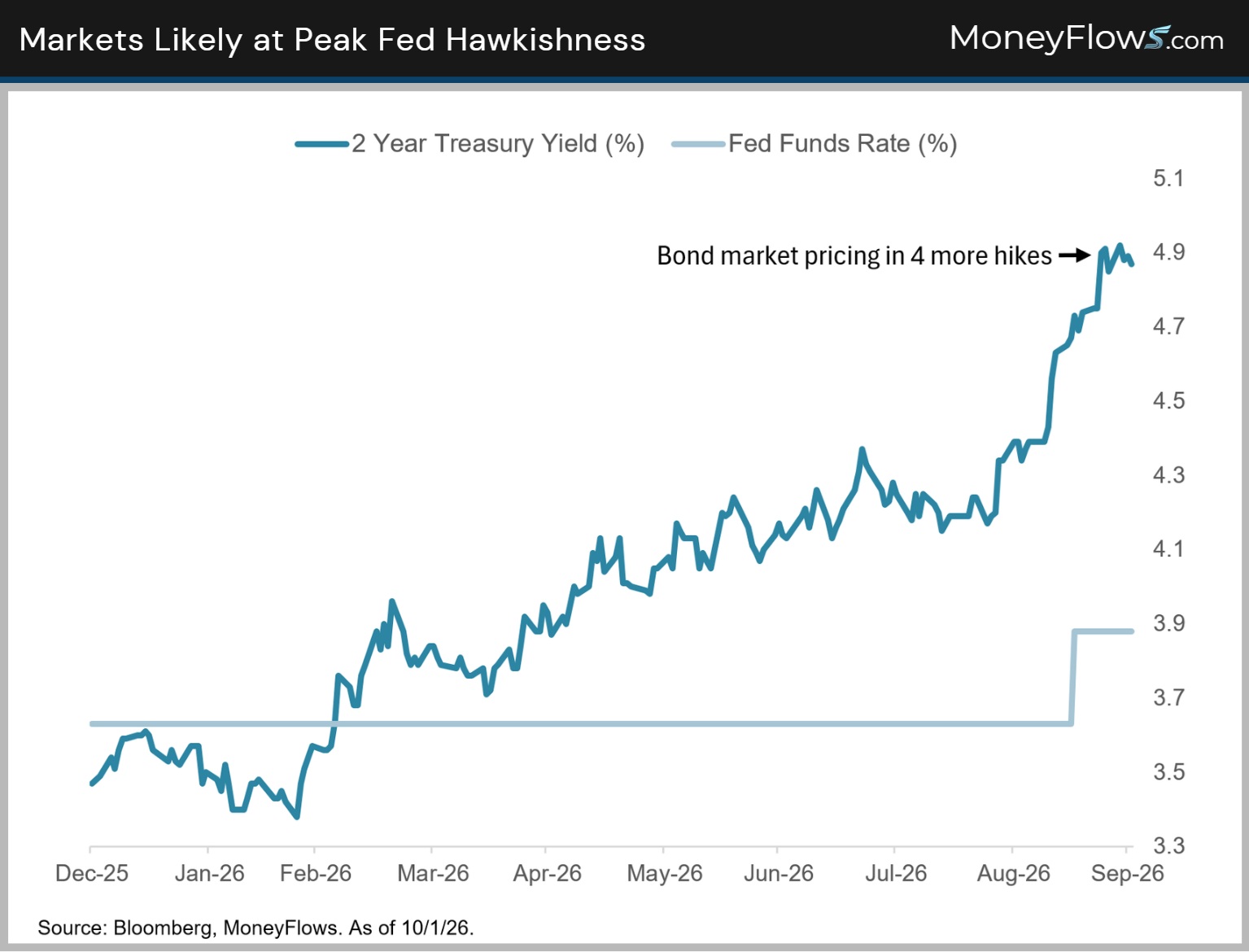
The time to buy stocks is when Fed hawkishness is sky high.
That’s now.
Stocks Have Done Better After Rate Hikes than Rate Cuts
Here’s reason #3 stocks can handle rate hikes. This one really cuts against the conventional crowd wisdom.
Equities have actually done better after Fed rate hikes vs. rate cuts.
Since 1982, the S&P 500 has averaged 6.2%, 14.9% and 32.7% gains, respectively, 6, 12 and 24 months after the beginning of a Fed tightening cycle.
That’s significantly better than the 5.6%, 11.2% and 26.6% gains seen 6, 12 and 24 months after the onset of Fed easing cycles:
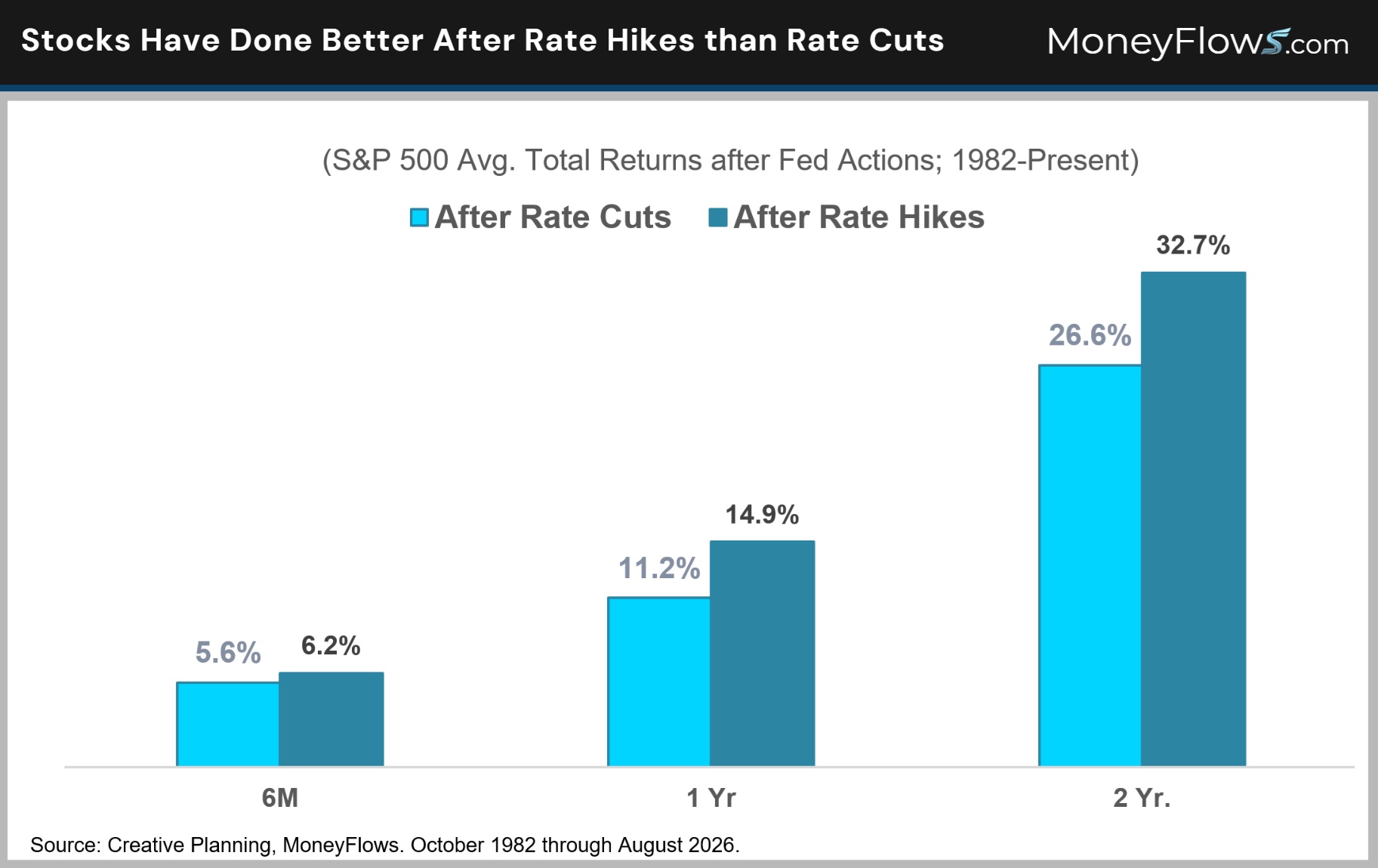
Remember, if the Fed is primarily hiking because of strong growth, stocks can do just fine.
What This Means for Your Portfolio
Despite the S&P 500 being just below its ATH of 7816, over 40% of S&P companies are down over 20% from their 52-week highs.
Worse yet, only 41% of index constituents remain above their 200-day moving averages.
Suffice it to say the S&P 500’s resilience has hidden a stealth correction across the broader stock market.
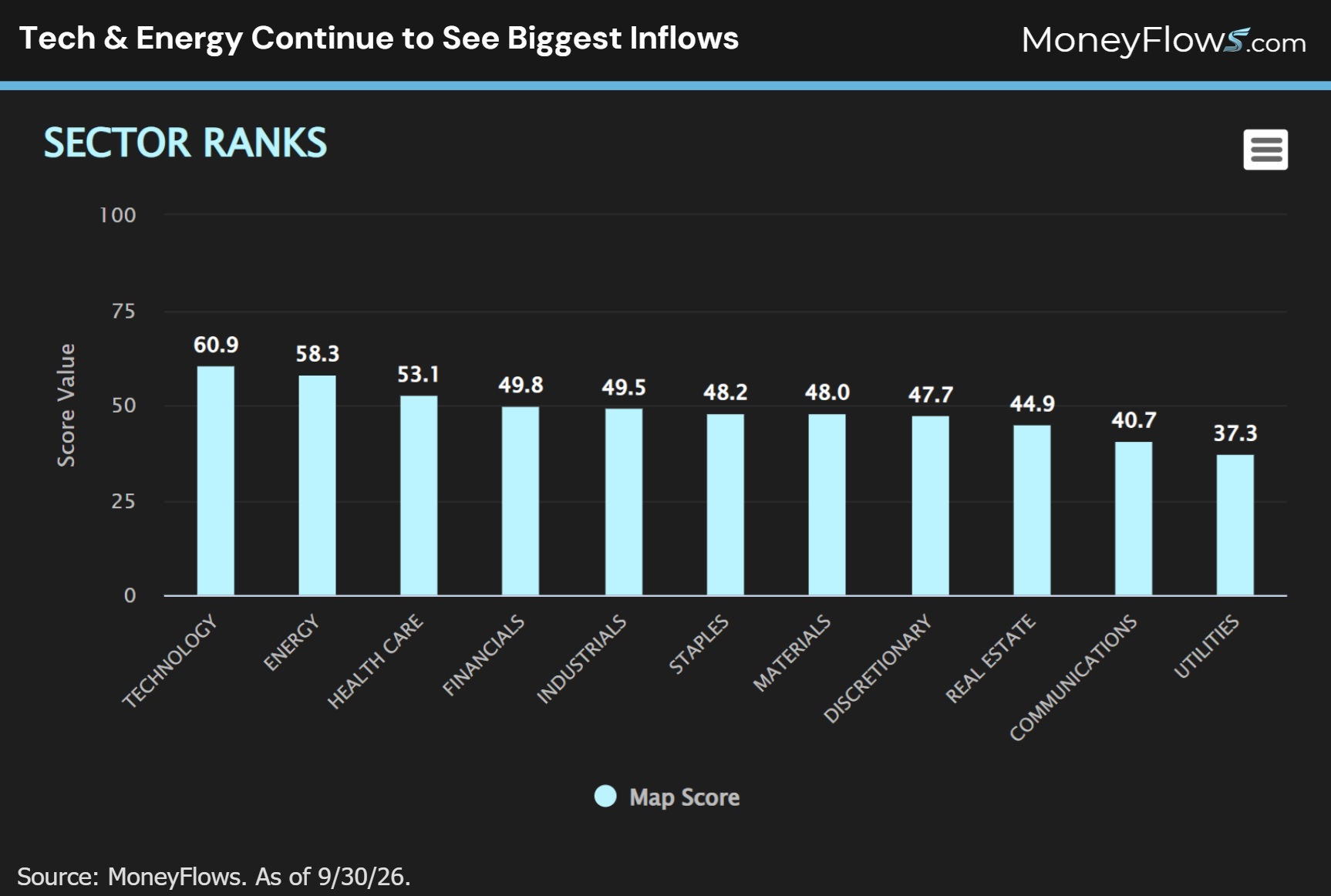
Market leadership has been confined to energy and tech with YTD gains of 37% and 28%, respectively, both of which have crushed the S&P’s strong 11.8% 2026 advance through September.
Less sensitivity to higher oil and rates has set tech and energy apart.
Energy obviously wins when energy prices rise.
As for technology, the Mag 7 is driving much of the sector’s alpha lately.
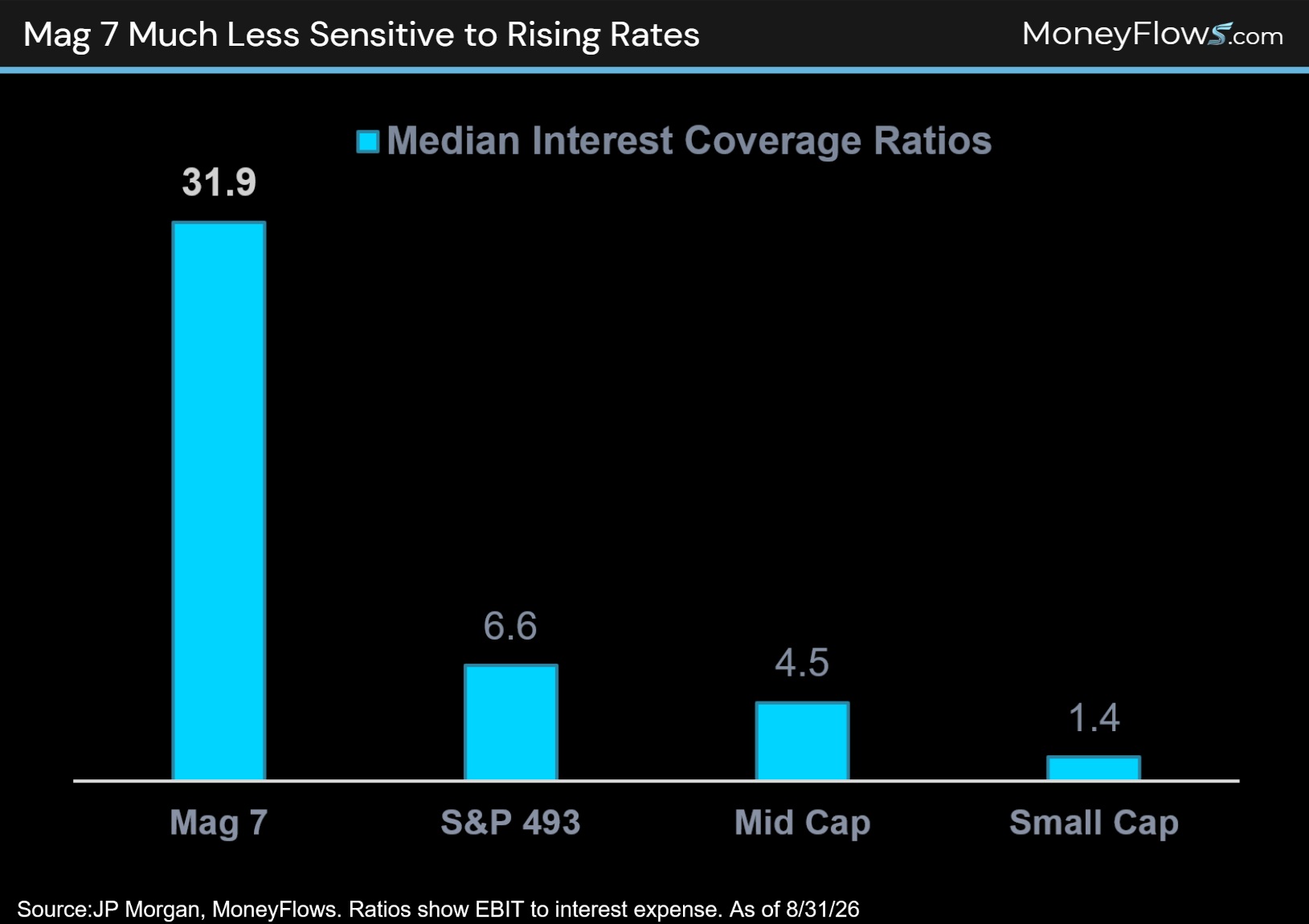
Big tech is outperforming because their fortress balance sheets leave them less vulnerable to Fed tightening and rising long-term rates than the S&P 493, mid-cap and small-cap stocks.
Note how the Mag 7’s interest coverage ratio of 31.9 towers over everyone else.
Small-caps have a lowly interest coverage ratio of only 1.4, making them much more rate-sensitive:
Our sector inflows are sending the same message with tech and energy firmly ahead in our rankings, while health care also sees healthy big money interest:
To win big, you need to drill down to individual names.
Not to worry, MoneyFlows was built to find winners.
Today’s stock list is long growthy tech and health care outliers.
Energy’s had a great run but, looking ahead, we see under the radar tech and health care names offering the most upside as oil and rates calm down.
Under-the-surface of the market is a world of hidden opportunity.
To get access and make even more from this call to action, sign up for our PRO (Annual) membership.
You’ll get our proprietary indicators and learn how our unique money flow approach finds outlier stocks early. Give it a shot!
If you’re a money manager or RIA and want portfolio solutions and deep ETF insights, reach out about our Advisor solution here.
Be early next time.
Go with the flows!
These tech and health care outliers are seeing huge inflows even in a nervous market. That’s a bullish signal.
They dominate our latest Outlier 20 most powerful winning stocks with big money activity.