

Small Cap Stocks Are Cheap and Growing Faster Than Mega-caps
by Alec Young All, Macro Insights, StocksAfter years of frustrating false starts, smaller companies are back...
...finally consistently outperforming.
The reason?
Small cap stocks are cheap and growing faster than mega-caps.
Today, we’ll outline the recent strength in the group, including:
- the diversification leverage angle
- how GDP trends favor smaller-sized firms
- the earnings trajectory
- and more
After you review the evidence, you’ll see the layup opportunity ahead.
Find a few AI-themed small caps and the upside is massive.
At the end, we’ll offer up a top-tier list of 25 small cap outliers seeing huge institutional inflows...with a few recently surging after AI-driven deals.
It’s time to win big by betting small.
Small Cap Stocks Finally Consistently Outperform
Before we jump into the bull case let’s set the stage with a quick performance review.
The S&P 500 has been a juggernaut for years.
It just wrapped up its biggest 6-week rip ever, rising 30.5% from March 31 through May 8.
Keeping pace with the S&P 500 has been a tall order.
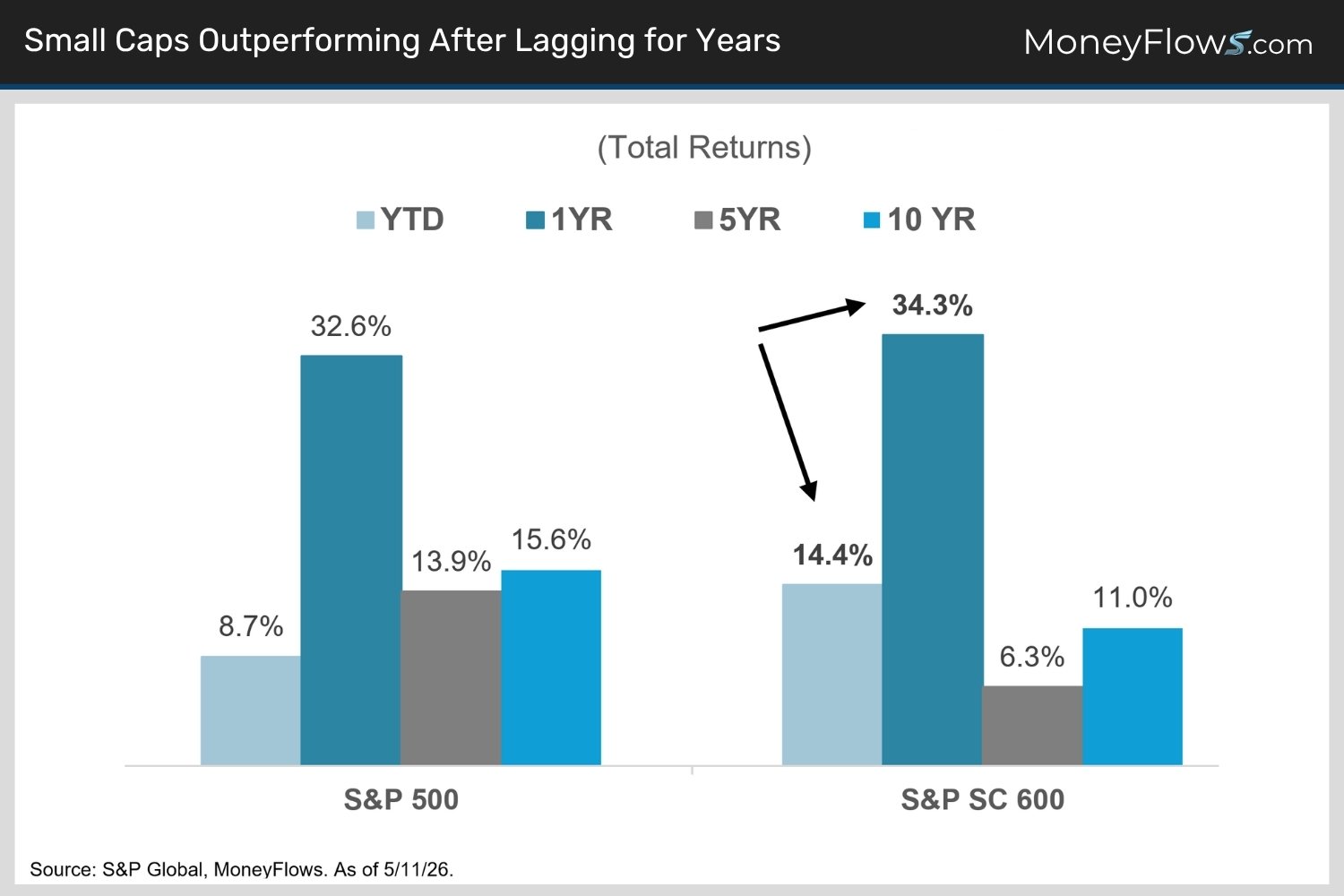
The mega cap index has posted strong 10-year, 15.6% annualized total returns (including dividends).
Small caps have held their own, gaining a respectable 11% a year, but the Mag seven have left them in the dust.
But the times they are a changing.
Small caps have been outperforming over the past 12 months, up an impressive 34% versus the S&P‘s 32% advance.
Better yet, small caps have widened their lead YTD with the S&P SC 600 up 14.4%, way ahead of the S&P’s 8.7% rise (chart).
There’s good reason for the outperformance.
Resilient Economy Favors More Domestic & Cyclical Tilt
Small cap stocks are a bet on cyclicality and domestic exposure.
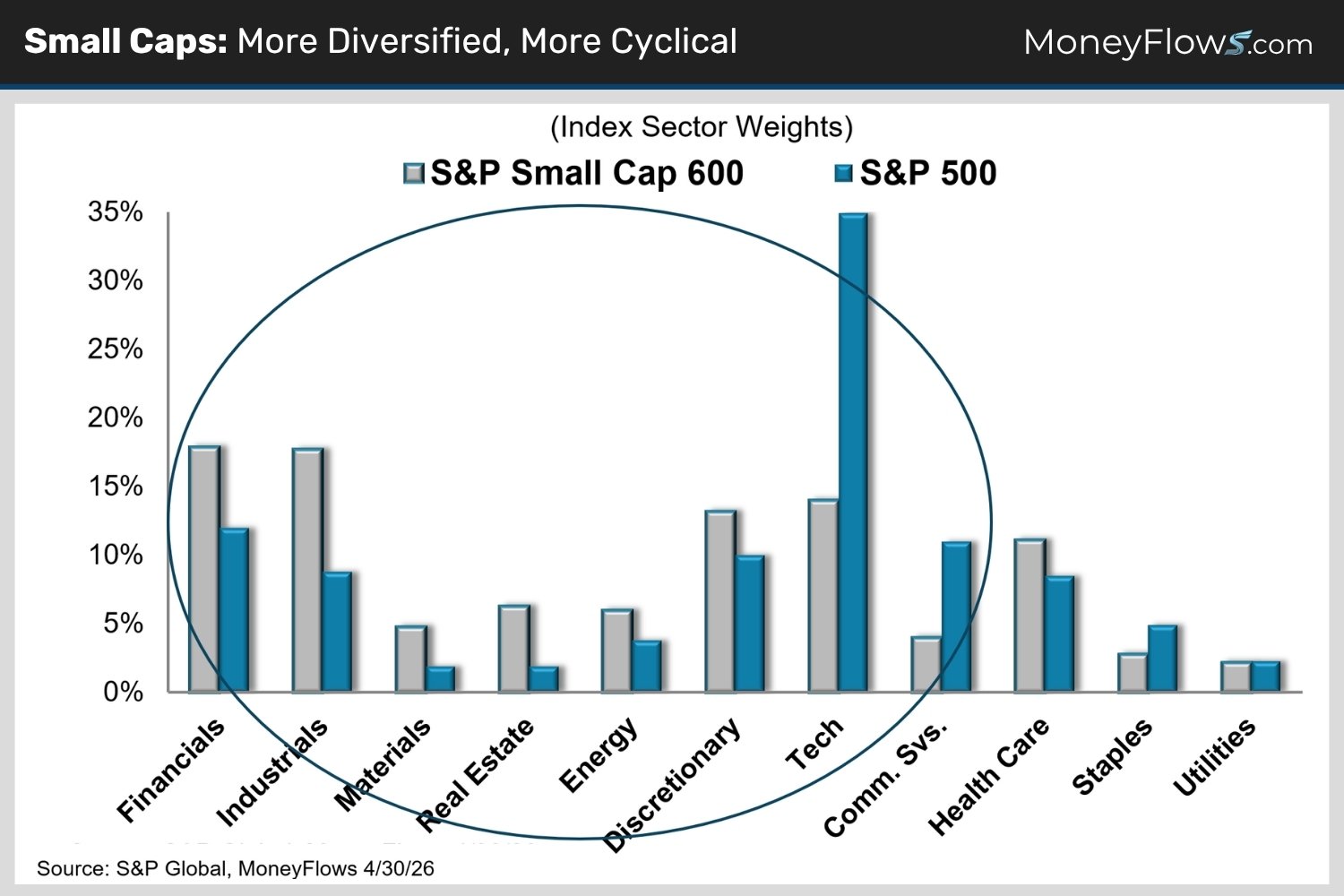
Indices like the Russell 2000 and the S&P Small Cap 600 have far greater exposure to cyclical sectors than the S&P 500 (chart).
Notice how the S&P Small Cap 600 has greater exposure to cyclical groups like financials, industrials and materials.
Also see the lighter allocation to technology:
Throw in the fact that small caps derive 80% of their sales in the USA, compared to 60% for large-caps, and you realize the asset class tilts domestic.
Here’s why being more domestic and cyclical matters:
Despite all the geopolitical headlines, the US economy is humming along.
The latest Atlanta Fed GDP NOW forecast calls for 3.7% Q2 real GDP growth as a healthy high-end consumer, bumper tax refunds and the AI infrastructure boom easily offset the drag from elevated energy prices.
But wait, the economic story gets better.
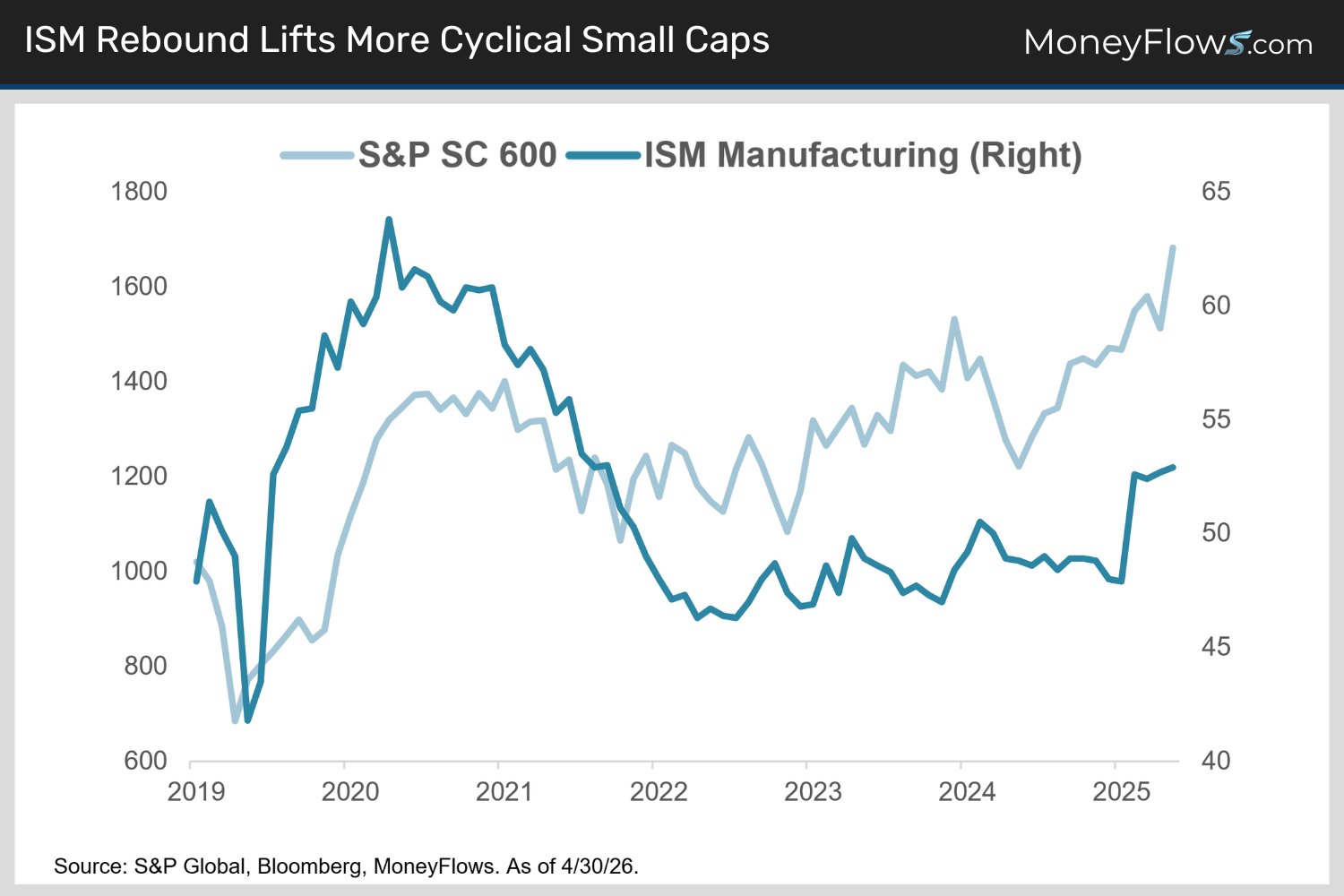
We know stocks always look ahead. The ISM Manufacturing index is Wall Street’s favorite forward-looking economic indicator.
It tells you what’s coming next by asking companies about their future investment and hiring plans.
When the ISM is above 50 it signals expansion. It’s at 5-year highs and has been over 50 all year.
It’s no surprise the small cap rally has accelerated amidst this bullish expansionary backdrop (chart).
You may wonder if the Small-cap trade as room to run.
The answer is YES.
Small Cap Stocks Are Cheap and Growing Faster Than Mega-caps
Let’s keep this bullish thesis going and talk about earnings.
Mega cap earnings growth has been much more robust than the rest of the market over the last decade. That’s one of the main reasons they’ve outperformed by so much.
But that dynamic is changing fast. Tougher year-over-year comparisons are making it harder for the mega caps to keep posting massive profit growth.
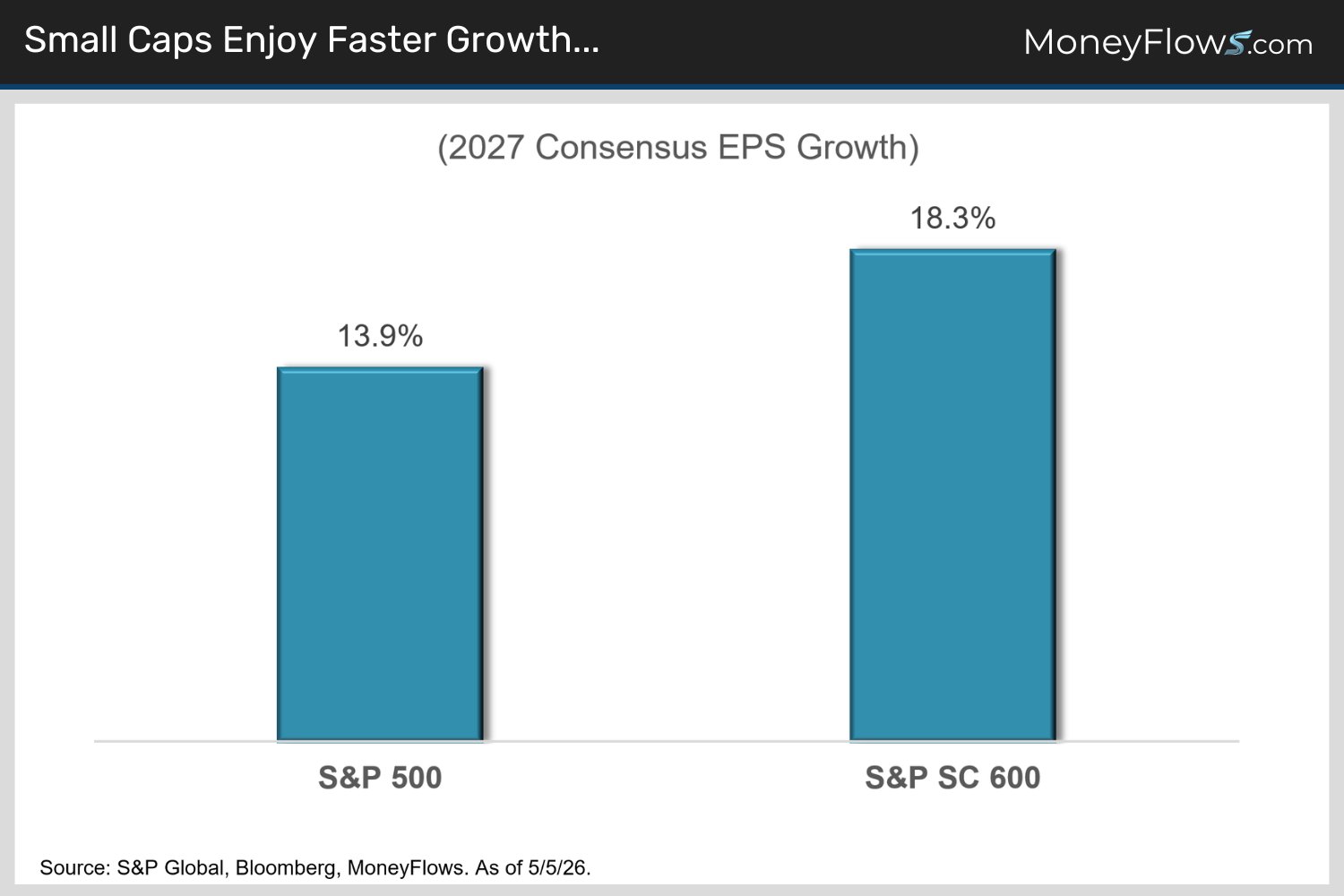
While big tech’s results remain strong, small cap earnings growth is poised to take the lead (chart).
Below reveals that small-caps are estimated to grow EPS by 18.3% next year, easily eclipsing the S&P 500 large-cap’s growth forecast of 13.9%:
Let’s shift gears and review valuations.
Desirable relative and absolute valuations in an accelerating EPS growth environment is turbo fuel.
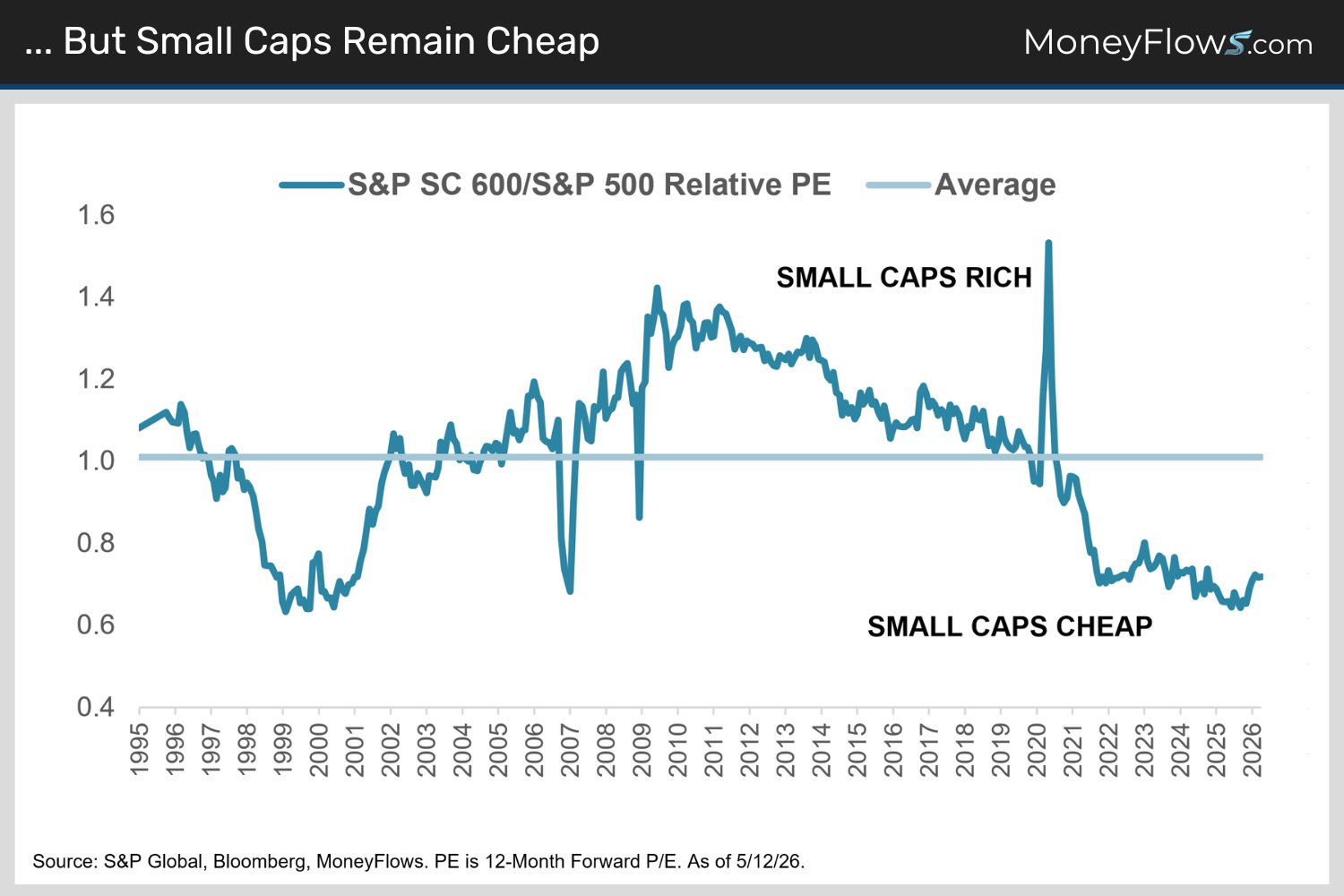
Small-cap stocks have rarely been cheaper relative to the S&P 500. Since 1995, they’ve averaged roughly the same valuation as large caps with both averaging 16X-17X forward PE ratios.
Right now, at 15.3X 12-month forward EPS, small-cap stocks are trading at a 28% discount to the S&P 500’s forward price-earnings ratio of 21.3X (chart).
With the economy healthy, earnings rising, and valuations low, greater domestic and cyclical exposure means the small cap rally is for real.
How do we know this?
Easy. We can see the massive inflows.
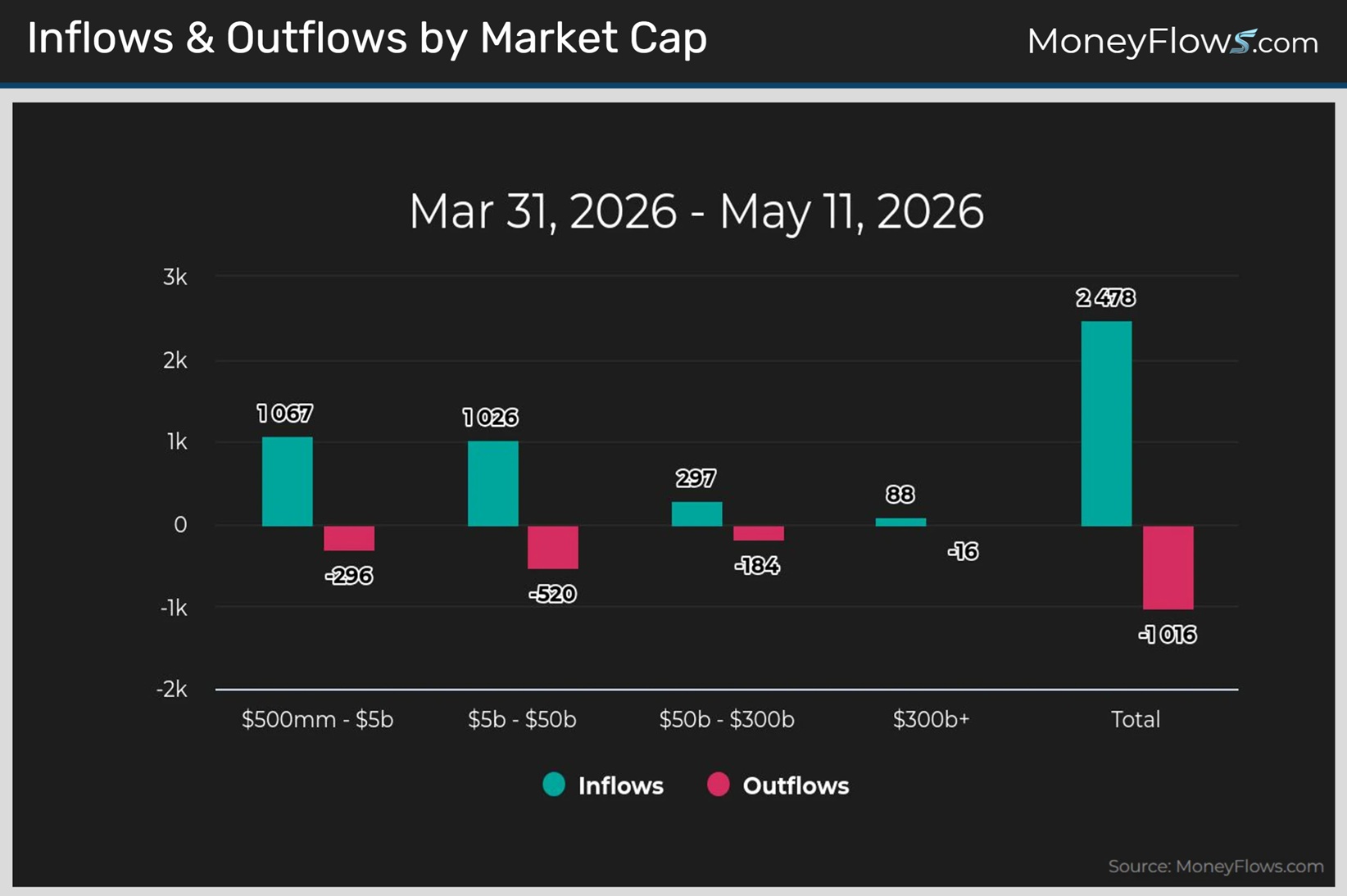
From March 31 through May 11th, a staggering 84% of our 2478 discrete equity inflows have been in companies with market caps below $50 billion:
Add it all up and the macro and the money flow backdrop both favor ascendant small caps.
That’s a powerful 1-2 punch!
What This Means for Your Portfolio
40% of Russell 2000 names lose money, according to the latest JP Morgan data.
We screened the higher quality, profitable S&P 600 Small Cap Index to find MoneyFlows top small cap outliers.
I’ve also included a few AI-themed names with big runways.
These stocks have the high MAP Scores across a variety of sectors.
Inflows have been constant, powering most of these names to one record high after another.
Under-the-surface of the market is a world of hidden opportunity.
To get access and make even more from this call to action, sign up for a PRO membership.
You’ll get our proprietary indicators and learn how our unique money flow approach finds outlier stocks early. Give it a shot!
If you’re a money manager or RIA and want portfolio solutions and deep ETF insights, reach out about our Advisor solution here.
Be early next time.
Go with the flows!
Small caps have taken the leadership baton.
Below is a sector-diversified list of 25 profitable, powerful winning small caps with big money activity.