
Market Rotation Ahead of Midterm Election
In NASA’s early days of space flight, there was a problem. Pilots simulated g-forces in centrifuges. At high forces, their bodies sent urgent distress signals. Heart rates spiked, vision narrowed, and they felt crushed. This seemed like a warning to stop.
But instruments said otherwise.
The centrifuge worked exactly as designed. Training wasn’t about making the feeling disappear. It was about teaching pilots to trust the instruments when every physical instinct screamed the opposite.
That training was necessary this week.
The Surface
Headlines looked alarming.
The 30-year Treasury yield touched 5.33%, a level not seen since 2007. Bond vigilantes, (investors who sell Treasurys to punish perceived fiscal recklessness), were in open revolt. U.S. Department of Treasury Secretary Scott Bessent responded by announcing doubled debt buybacks, briefly pushing yields lower before they reversed to 5.25% by week’s end.
Crude oil climbed to $93.78 per barrel as tensions with Iran continued.
The Nasdaq Composite fell in four of five sessions.
On the surface, it looked like damage.
Under the Noise
Flow data told a more sophisticated story.
The top six exchange-traded fund inflows this week were all gold funds, a classic macro hedge against bond market volatility and inflation. But right alongside gold buying were inflows into Ethereum and Bitcoin ETFs – simultaneously.
That combination, hard-asset hedge plus cryptocurrency risk-on, isn’t what panic looks like. It’s what repositioning looks like. Global and domestic equity ETFs attracted inflows while investment-grade bond ETFs saw outflows.
Money wasn’t leaving markets. It was changing seats.
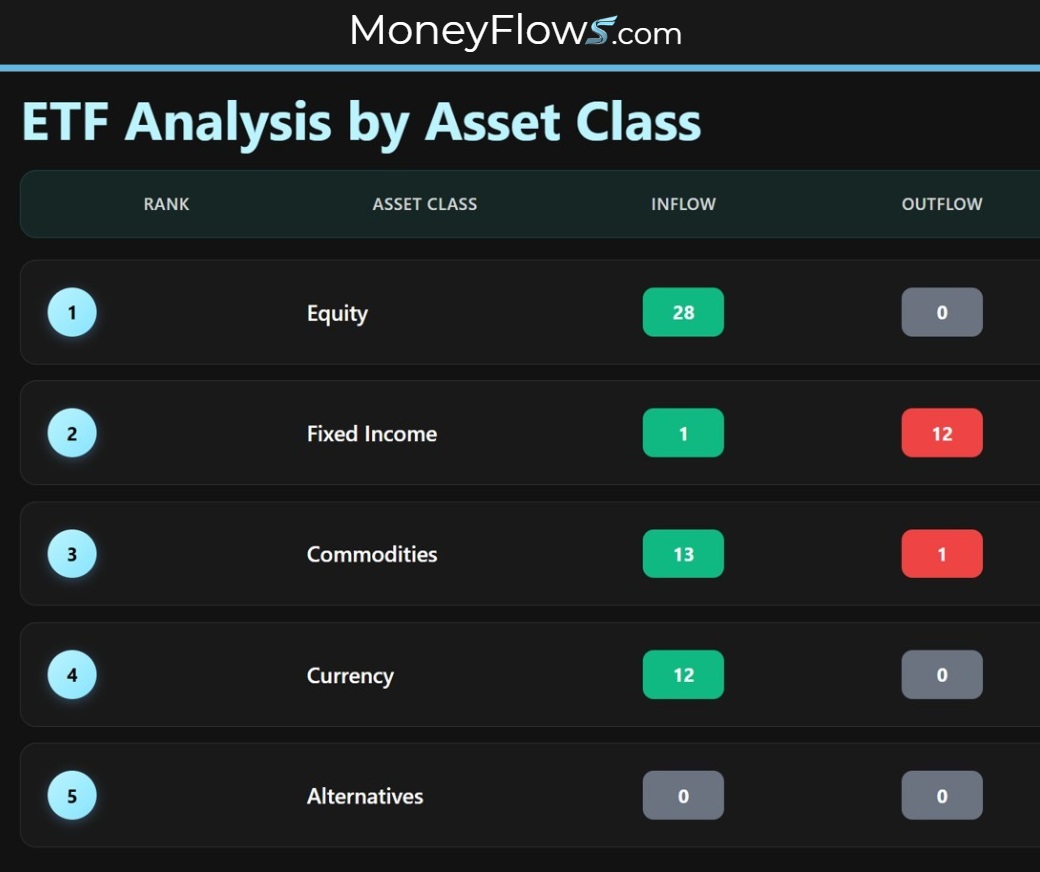
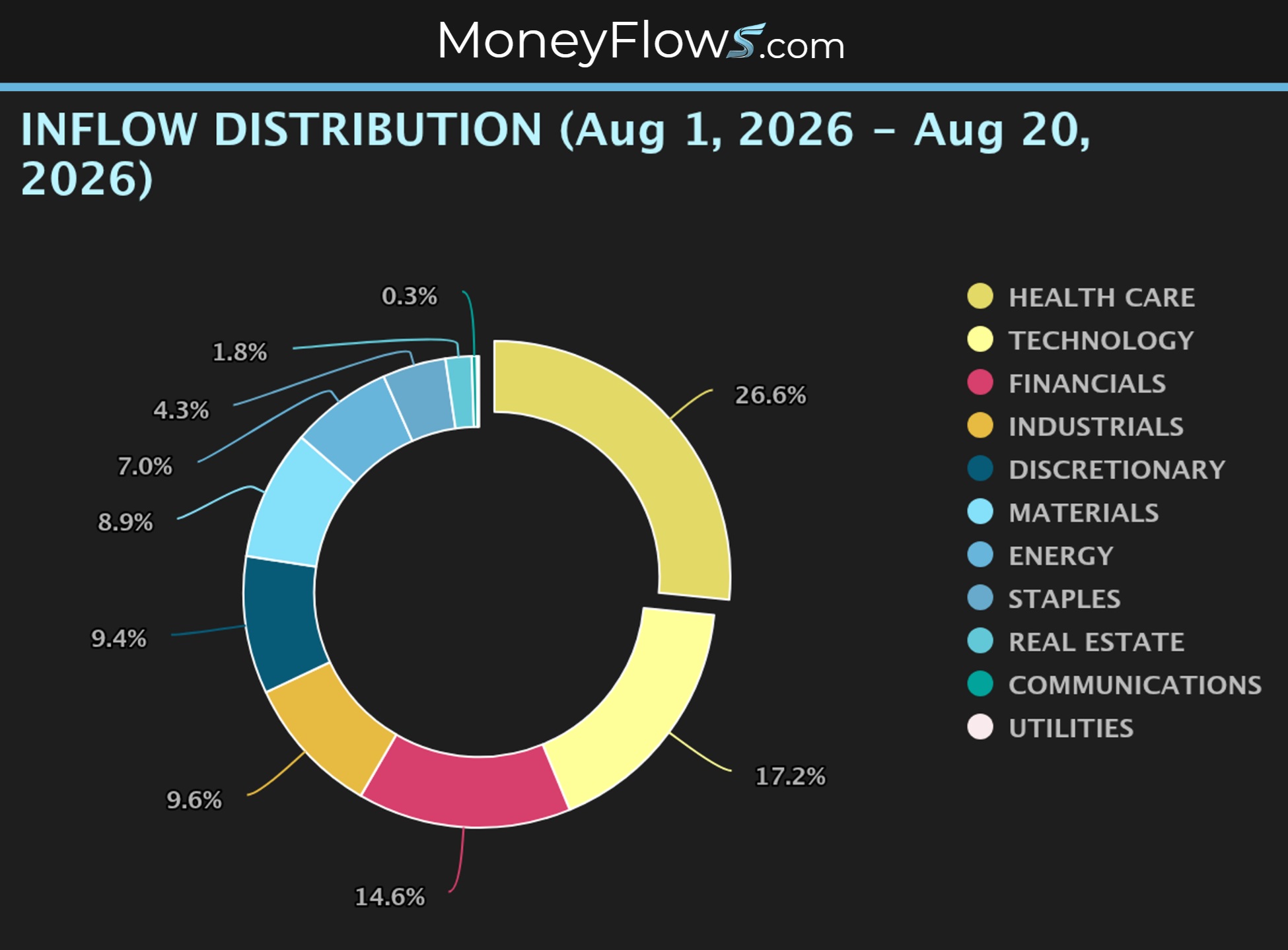
Sector flows confirmed it. Health care dominated for the ninth consecutive week at 97 net inflows. That streak wasn’t random. The instruments were pointing at something before the headlines caught up. On Wednesday, Moderna surged 177% and Merck climbed 12.6% after their personalized mRNA cancer vaccine became the first of its kind to succeed in a Phase 3 trial.
Nine weeks of healthcare inflows. One week of confirmation.
Energy surged to 50 net inflows, mostly in exploration and production companies.
Materials also saw inflows, driven almost entirely by gold miners as the macro hedge thesis built across multiple asset classes simultaneously.
Market Rotation Ahead of Midterm Election
The political overlay added another layer of uncertainty Wall Street really dislikes.
Democratic Socialist Angie Nixon scored a major upset in Florida’s Democratic Senate primary, defeating Alex Vindman. Progressive Aisha Wahab won California’s special House election to fill Eric Swalwell’s seat. The leftward drift of the Democratic Party heading into November primaries introduces policy uncertainty on taxes, regulation, and AI oversight that markets have not fully priced.
Midterm rhetoric is ratcheting up. Outcomes are unclear. Uncertainty is the one thing Wall Street consistently dislikes more than bad news.
And yet beneath all of it, corporate America continued crushing it.
The blended net profit margin for the S&P 500 reached 16.9% for Q2 2026, the highest since FactSet began tracking in 2009. Semiconductors reported 135% earnings growth. Analysts project full-year 2026 S&P 500 earnings growth of 30%.
LSEG confirms 85.1% companies reporting beat per-share earnings expectations. Also, underlying earnings growth excluding Alphabet/Amazon one-time gains were approximately 31-32%. That’s one of the strongest profit growth periods in recent years.
The AI buildout isn’t conjecture anymore. It’s in the numbers.
The Emotional Test
For me, this is where the training matters most.
Several high-growth technology and optical networking companies fell 5% to 9% in a single session this week with no fundamental change. Fabrinet (FN, which I hold in personal, managed, or publishing accounts) reported record quarterly revenue of $1.316 billion, up 45% year-over-year, beat earnings estimates by more than 7%, and guided the next quarter up 43%. The stock fell 8.6%.
The business was exceptional. The tape was broken.
This is what thin August markets do to high-conviction positions. Senior traders are away. Desks are staffed with juniors. Market makers see big sellers and yank bids, knowing someone has to get out, making the doorway smaller. Kids aren’t back in school yet, except here in Florida (maddeningly so). Liquidity dries up. Spreads widen. Great stocks get sold at bad prices.
The physical sensation of watching this is genuinely unpleasant. It feels like being wrong. It feels like the market knows something you don’t.
The instruments say otherwise.
Consider what the data shows across one of my portfolios of nine stocks, every one of which was down this week.
- Average one-year earnings growth: 248%
- Average three-year earnings growth: 115%
- Forward estimated earnings growth: 40%
- Forward estimated sales growth: 28%
- Profit margins: 17%
- Free cash flow per share: $21.88
- Debt ratio: 16%
- Year-to-date return: 59% (despite the recent pressure)

These are not distressed companies. They’re among the most fundamentally superior growth businesses available anywhere in public markets. Their forward price-to-earnings ratios compressed this week because their prices fell as earnings estimates held or rose. They are mathematically cheaper today than they were before the selling started.
Queasiness is real. Math runs opposite.
The Sector Spotlight
Flows this week show where capital is moving. Health care leads for a ninth straight week, now validated by a genuine scientific breakthrough. Energy is accumulating as oil reprices higher. Gold is building as a macro hedge. Crypto is adding alongside it as a risk-on expression. Equities are still attracting net inflows even as bonds see outflows.
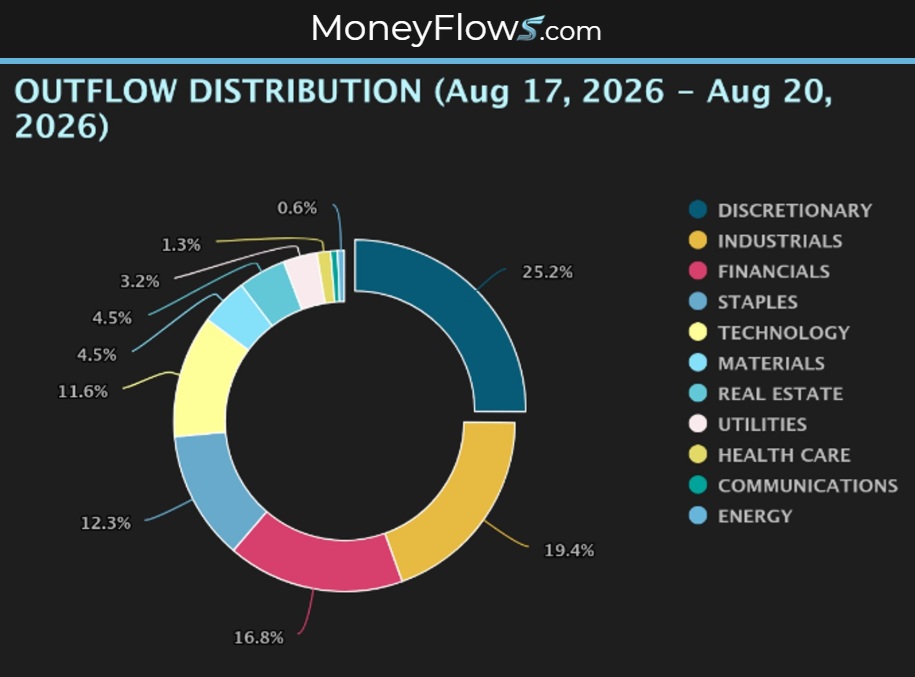
Technology is essentially flat, not breaking, just digesting. Financials and industrials gave back some of their recent gains as rate sensitivity weighed.
The BMI softened from 68.6% to 66.5%, real but modest. The CBOE Volatility Index (VIX) ticked from 14.25 to 16.01, elevated but not alarming.
This is not a market in distress. This is a market rotating ahead of a midterm election, hedging macro uncertainty, and occasionally forcing out levered positions through thin August liquidity.
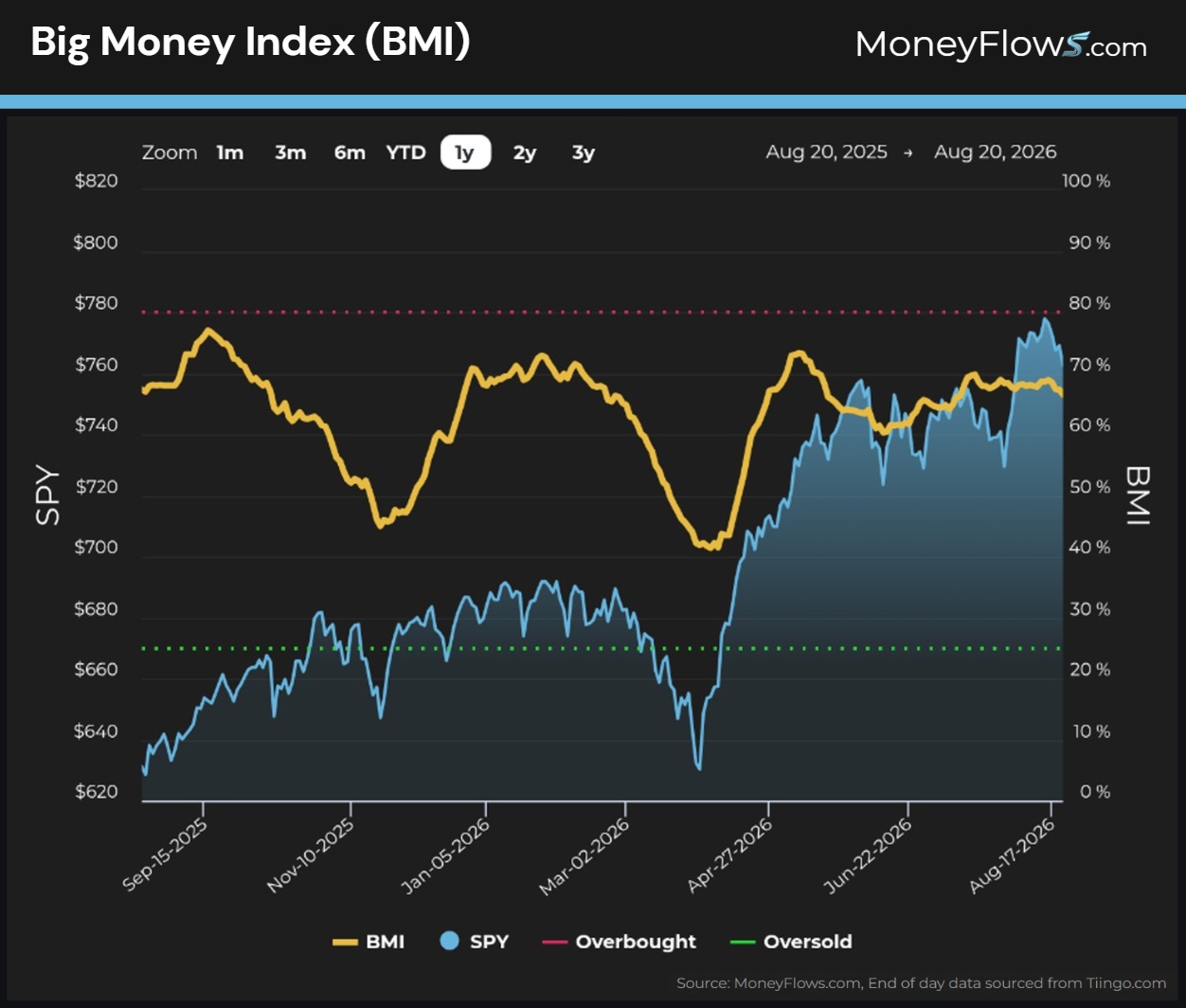
The midterm-year script remains intact. Every comparable year since 1990 was higher nine and 12 months from late July. August and September are the honest caution zone. The fourth quarter is when the calendar turns.
The centrifuge feels like danger. The instruments say otherwise. The pilot’s job isn’t to stop feeling g-forces. It’s to keep flying.
As legendary Chinese philosopher Lao Tzu wrote, “To the mind that is still, the whole universe surrenders.”
If you’re a serious investor or money manager, get started today.
Our Frontiers PRO subscription showcases daily flows on stocks and gives you access to our weekly Outlier 20 report.
This is the report that has found EVERY SINGLE ONE of our Outlier stocks.
Enjoy a click-through experience unlike anything out there.
Professional money managers and RIAs looking for additional portfolio solutions including ETF flows & ranks and your own Portfolio Tracking tools, please reach out about our Advisor Solution and Emerging Advisor Program.
Have a great week!